


Find out more about what you need to know to spot these problems, and how to tackle or report them.
- Rising damp
- Penetrating damp
- Plumbing defects
- Dampness
- Keeping your home condensation-free
- How to report your concerns
- Struggling to heat your home
Rising damp
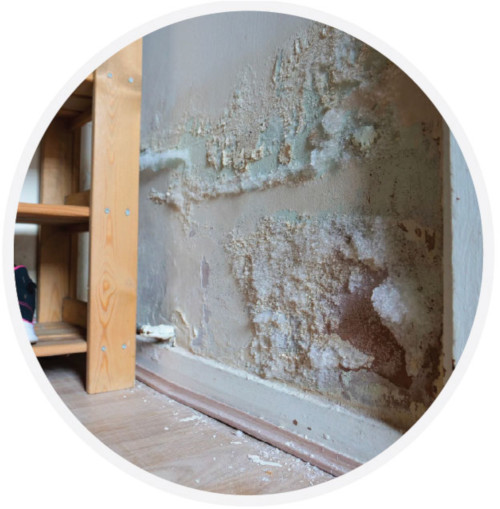
Rising damp is caused by ground water moving up through a wall. This is usually prevented by a barrier called a Damp-Proof Course (DPC).
This can be seen as a horizontal plastic black strip low down on the outside wall (typically visible on homes built from 1960 onwards). Older homes (without the black strip) have a DPC but these may break down over time.
Rising damp only affects walls in basements or on the ground floor.
What to look out for:
- a ‘tidemark’ along the affected wall from the floor up
- blistering of paintwork or peeling wallpaper from around skirting boards and up
- damaged or crumbling skirting boards or floor boards
- white salt stains on the affected areas
Penetrating damp
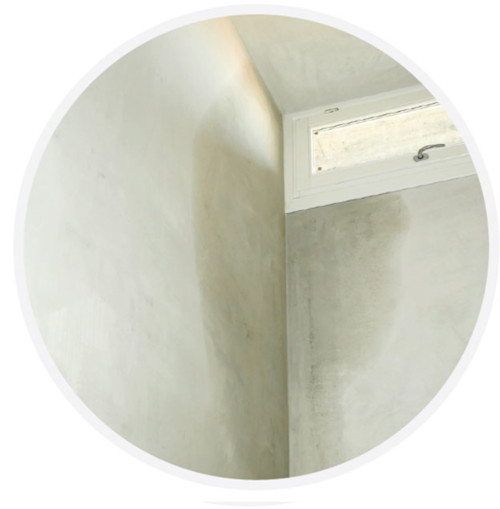
Faults to the structure of the outside of the home such as missing brickwork or tiles, cracked rendering, blocked or broken guttering, gaps around windows or doors which will allow water to pass from the outside to the inside.
What to look out for:
- localised damp patches on internal walls or ceilings
- damp patch gets worse after wet weather
- a defect to the building on the outside in the location of the damp inside
Plumbing defects
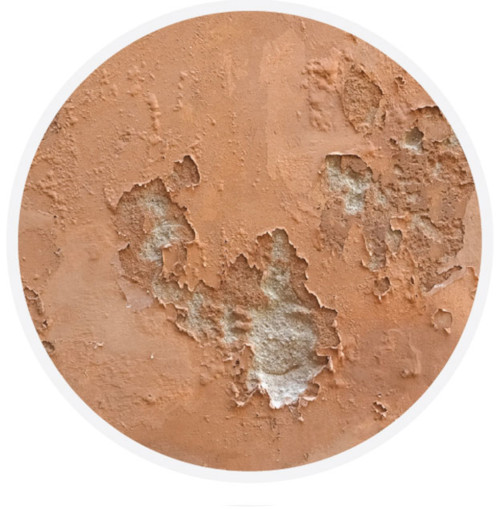
Leaks from water or waste pipes, particularly in kitchens and bathrooms. Defective plumbing can cause a constant leak from water pipes, radiators or a damaged water closet. It can create an on and off leak from waste pipes where the water flow is not constant.
What to look out for:
- dampness that is not affected by the weather
- wet areas behind sinks, toilets or where household appliances are plumbed in
- damp patches on ceilings - especially if there is a kitchen or bathroom above
- damp areas that get worse when taps are run, the shower is on, or the bath is emptying
- seals around bath, showers and sinks
Dampness
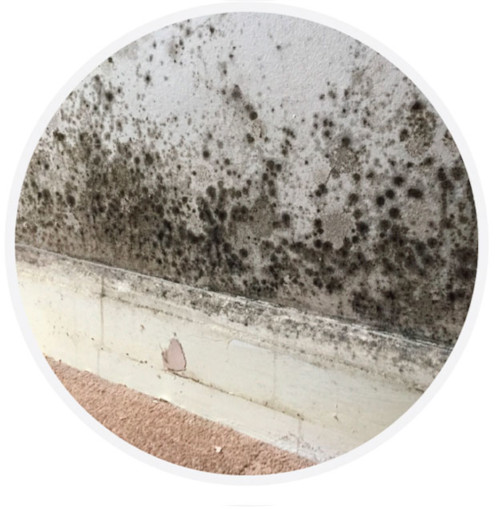
It’s the most common type of damp in homes and it mainly happens in winter when walls are colder than the air inside.
Condensation occurs when moist air comes into contact with a cold surface like a window, glazed tiles or an outside wall. The water vapour in the air cools and changes to water drops. These can soak into paintwork creating the ideal conditions for black mould to grow.
What to look out for:
- water droplets on windows or walls
- patches of black mould - usually in the corner of rooms, north-facing walls and on or near windows or mirrors
- condensation dampness may be worse during the colder
- months but is not directly affected by wet or dry weather
- unpleasant ‘damp’ smell
- look throughout your home for any signs of the first 3 types of damp listed here, as they could increase the levels of moisture in the air
Keeping your home condensation-free
You can get condensation in lots of different areas of your home.
Kitchen
Keep the door closed and make sure extractor fans are on when cooking. You should not open windows in rooms where an actively working fan is fitted. This has a negative effect on the fans ability to pull moisture from the room.
Use lids on pans and kettles to reduce the amount of steam released.
Bathroom
Close the bathroom door when bathing or showering, and make sure extractor fans are on. You should not open windows in rooms where an actively working fan is fitted. This has a negative effect on the fans ability to pull moisture from the room.
Wipe down baths, showers and tiles after use. Use a mould and mildew remover spray (not bleach or soapy water) whenever black mould appears on walls, ceiling, tiles or grout.
Drying clothes
Dry your clothes outdoors whenever you can. If you need to dry clothes indoors, such as on a radiator, do so in one room with the window open or ideally in a room with an actively running extractor fan. Only use tumble driers with the vent fixed to the outside.
Heating
It’s best to maintain low level background heating at all times when managing condensation problems. This is because warm air holds much more moisture than cold air. Cold air will reach saturation point sooner than warm, this is when condensation will form on cooler surfaces, such as wall, windows and ceilings.
You should control the heating system using the room thermostat rather than the time switch. This doesn’t mean that the heating will run continuously, it means that the thermostat will turn the boiler on when the room temperature drops below your chosen preset temperature.
Internal temperatures should be maintained at a minimum of 18 degrees celcius or higher to suit your comfort levels. You should note that turning off heating to individual rooms is a false economy.
Furniture
If you can, leave a gap of at least an inch between your furniture and external walls, or put large furniture against internal walls. Don’t pile things up against walls or overfill cupboards - allow air to circulate.
Ventilation
Trickle vents should be opened on windows in rooms not containing an extractor fan when fans are running. If you don’t have trickle vents, then slightly crack open a window when at home. It’s important to have continuous air exchange but without losing the heat in your home.
Wipe moisture from windows and sills when it appears.
Heaters
Use your central heating and avoid using portable gas and paraffin heaters. They can produce up to 5 litres of moisture a day.
Draught proofing and insulation
Try to keep warmth in by fitting draught excluders on doors and windows and fitting radiator reflectors.
Removing black mould
Regular wiping down of all areas that are prone to surface condensation will prevent mould growth. These are areas such as windows, window sills and around baths and shower trays, this will reduce mildew in sealant forming.
For black spot mould, first remove any loose spores using a vacuum, then apply fungicidal treatments such as MAXAM pura, these are an ideal solution to kill mould spores and stabilise the surface ready to paint, once allowed to dry.
For a temporary fix, you can make a simple wash using 4 parts water to 1 part bleach and a small amount of washing up liquid, wash the affected area and leave to dry for a week.
How to report your concerns
If signs of dampness in your home look like any shown in this factsheet, take action.
Report your concerns to us as soon as possible. We’ll assess the problem and work out the right solution for it.
Our phone line is open 8.30am to 5.00pm, Monday to Friday, on telephone: 01904 551550 (option 4, option 1). Or email: housing.repairs@york.gov.uk.
If the problem is severe and persists after you have done this, or if you want further advice, contact us.
If you're unhappy about how we have responded to a request for a repair, or how we have carried out a repair, please tell us first by email: haveyoursay@york.gov.uk. Your concern will be assessed and treated impartially.
Struggling to heat your home
We can look at your situation to see what help you can get towards energy costs.
Contact us on telephone: 01904 552044, or email: incomeservices@york.gov.uk. Alternatively, find help with your utility bills online.
Also see
Housing Repairs
Housing Repairs - Out of hours emergencies
Telephone: 01904 630405, or 01904 427699.