


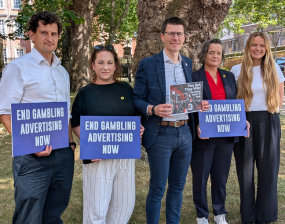
A major new report from City of York Council has revealed the “hidden harms” of gambling in the city, and calls for urgent action.
A major new report from City of York Council has revealed the hidden harms of gambling in the city, with thousands of residents affected and widespread impacts on families, communities and public services.
The Director of Public Health Annual Report 2025 to 2026, You Bet, They Win: Gambling Harm in York, shows that changes in the gambling market - particularly the growth of online gambling - have significantly widened access to gambling products, making this a serious public health issue. At the same time, gambling companies have seen their annual profits double to £16 billion.
The report shows that:
- during a typical premier league game, viewers are bombarded with an average of 12.6 gambling ‘messages’ per minute
- more than 3,000 children in York are living with someone affected by harmful gambling
- 1 in 12 residents are harmed by someone else’s gambling
- gambling harm is extensive, with local and national evidence linking it to financial crisis, suicide, relationship breakdown, homelessness and early death
- nationally, the report highlights that the wider cost to the economy is estimated at over £1.7 billion annually.
Launching the report, Peter Roderick, Director of Public Health for York, said:
Ultimately, we want people to be able to enjoy gaming and sport for what they are, and to have money in their pockets, not to be held back by harmful addictive products with devastating consequences.
“In the digital age, the gambling industry has developed a sophisticated tools which extract huge sums from those most at risk, leaving a trail of financial hardship, damaged relationships and, tragically, lives lost.
“But this harm is preventable. By taking a public health approach, tackling aggressive marketing, putting an end to industry involvement in how gambling is regulated, and improving support for those affected, we can reduce this suffering and protect our communities.”
The report identifies the rapid growth of online gambling, targeted advertising, and highly addictive product design as major drivers of harm, alongside a lack of awareness and limited local support pathways.
It also highlights inequalities, with people in more deprived communities more likely to experience harm and higher concentrations of gambling venues in these areas.
Cllr Lucy Steels‑Walshaw, Executive Member for Health, Wellbeing and Adult Social Care, said:
We know that for some people gambling doesn’t have an impact on their lives, but these findings highlight serious harms for other who are being significantly affected, and that this happens far more frequent than many of us might have realised.
“We’re working closely with partners to raise awareness, improve access to support, and reduce the impact harmful gambling is having on individuals, families, and communities.
“This report gives us a clear and practical route forward, and we’re committed to delivering meaningful change for residents.”
Alongside the publication of the report, City of York Council has signed up to join the Coalition To End Gambling Ads (CEGA), alongside 15 other Local Authorities as well as football teams, voluntary organisations and faith groups.
Will Prochaska, Director of the Coalition to End Gambling Ads (CEGA), welcomed the report and news that City of York will be signing up to CEGA:
York is showing real leadership in recognising gambling harm as a public health issue. The evidence is clear that aggressive marketing and widespread advertising are fuelling this harm, particularly among those already at risk. Reports like this are vital in building the case for stronger national action to reduce exposure and protect the public.
The report sets out 10 recommendations, including:
- establishing a city-wide gambling harms network
- increasing training for frontline staff
- improving early identification through health services
- expanding recovery and peer support
- supporting national efforts to restrict gambling advertising
The report concludes that local action alone is not enough, calling for stronger national regulation on advertising, product design and industry practices, alongside sustained investment in prevention and treatment.